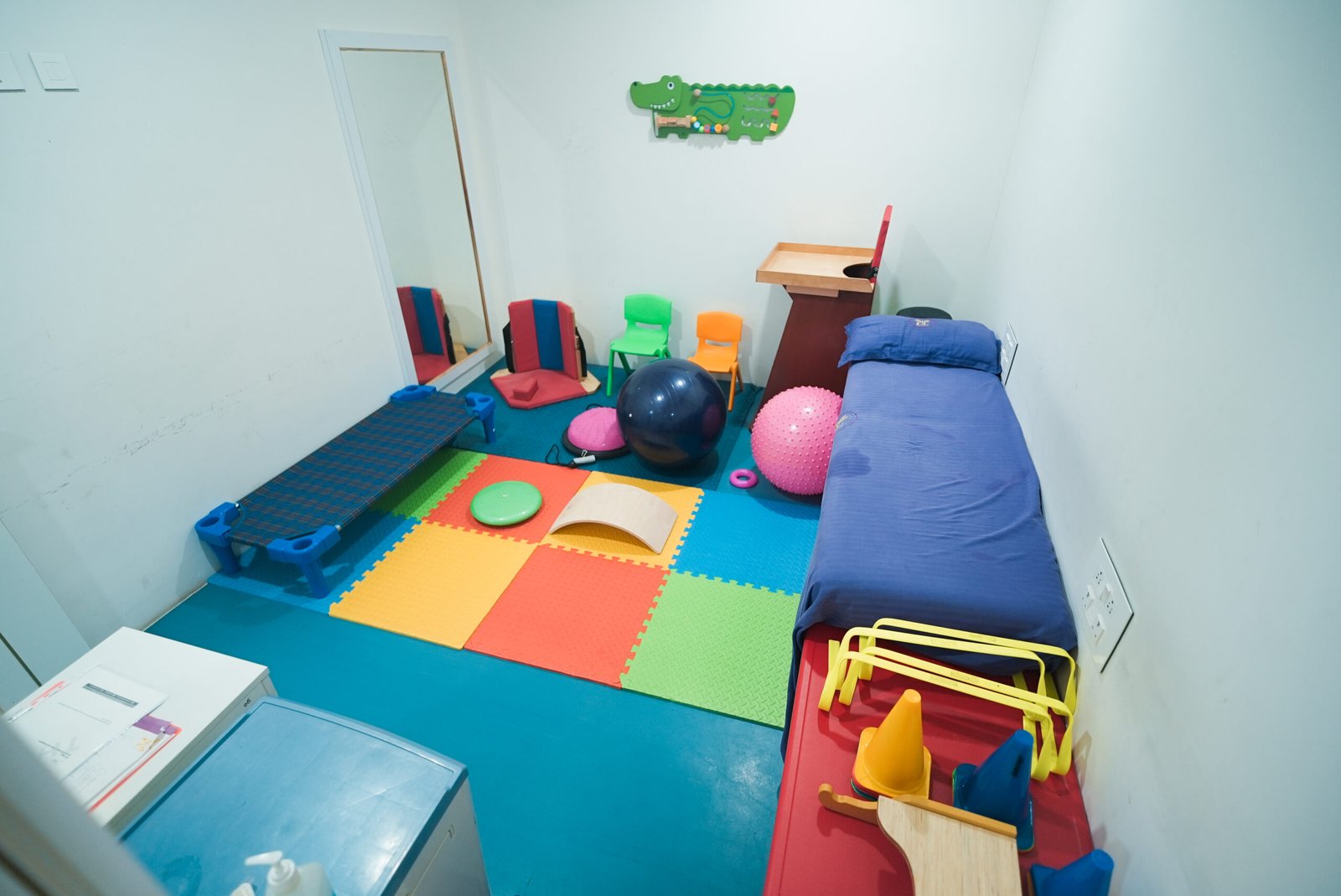
What is Sensory Integration ?
Sensory integration is like the brain’s “control center” where information from the senses — touch, movement, balance, sound, and sight — is organized to help children respond properly to the world around them
It is the foundation that helps children learn, play, communicate, manage emotions, and participate in daily life — from schoolwork and playtime to eating, dressing, and social interaction.
We have 8 senses. They are:
- Sight – seeing light, color, movement
- Sound – hearing noises and voices
- Touch – feeling textures, temperature, pressure
- Taste – detecting flavors and food textures
- Smell – sensing odors
- Vestibular – balance and movement (feeling gravity, speeding, spinning)
- Proprioception – body awareness (knowing where your body is in space)
- Interoception – internal signals (hunger, thirst, heartbeat, needing the toilet)
Why Do Some Children Struggle?
Some children find it harder for the brain to organize sensory information smoothly. This may happen due to developmental differences, prematurity, autism, ADHD, genetics, or even overload from busy environments, noise, and excessive screen exposure.
When sensory processing becomes difficult, everyday experiences may feel overwhelming or confusing. Children may:
• Get distracted easily
• Avoid certain sounds, touch, or movements
• Become overactive or restless
• Have meltdowns or emotional outbursts
• Seek excessive movement or sensory input
• Find it difficult to focus and learn
Why Is Sensory Integration Important?
When sensory processing works well, children can:
• Stay calm and regulated
• Focus and pay attention better
• Improve writing and coordination
• Play and interact confidently
• Learn new skills more easily
• Become more independent in daily activities
For example:
• In class, children need to ignore background noise and focus on the teacher.
• While writing, they use touch and body awareness to hold the pencil properly.
• During play, they learn to manage sounds, movement, and emotions calmly.
Good sensory integration helps children feel organized, confident, and ready to participate in everyday life.
How Can We Help Children with Sensory Needs?