Neurodevelopmental disorders affect how the brain grows, learns, and processes information. These conditions often begin in early childhood and can significantly impact behavior, communication, academic performance, and social skills. While each child is unique, early identification and support from the right experts—such as those at a Child Development Centre HSR Layout—can make a transformative difference in a child’s life.
What Are Neurodevelopmental Disorders?
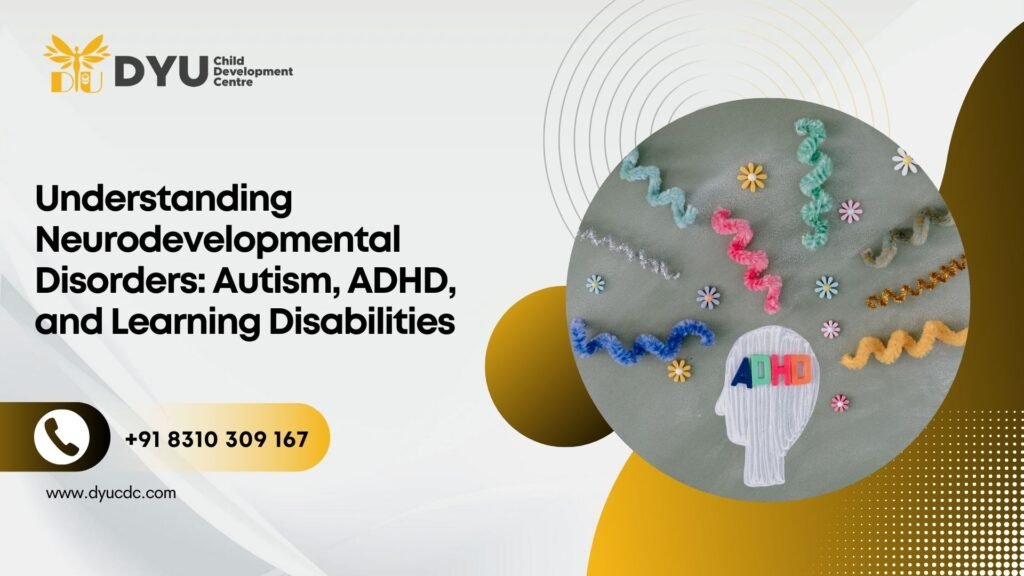
Neurodevelopmental disorders are conditions that impact neurological development. Three of the most commonly discussed are Autism Spectrum Disorder (ASD), Attention-Deficit/Hyperactivity Disorder (ADHD), and Learning Disabilities (LDs). Understanding the differences and similarities between these can help parents take timely steps.
Autism Spectrum Disorder (ASD)
Autism affects communication, social interaction, and behavior. Children with ASD may face challenges such as:
- Difficulty with eye contact or social cues
- Repetitive behaviors
- Sensory sensitivities
- Delayed speech
However, many children also show remarkable strengths like strong memory, problem-solving ability, and exceptional focus on interests. Early therapy at a Child Development Centre HSR Layout can help improve communication skills, behavior, and daily functioning.
Attention-Deficit/Hyperactivity Disorder (ADHD)
ADHD is often misunderstood as ‘being naughty’ or ‘hyper,’ but it is a genuine medical condition that affects attention and impulse control. Children with ADHD may:
- Struggle to stay focused
- Act impulsively
- Have difficulty staying organized
- Show excessive activity
Therapies such as behavior therapy, occupational therapy, and structured routines can help children manage these symptoms effectively.
Learning Disabilities (LDs)
Learning Disabilities impact academic skills like reading, writing, math, and comprehension. Common forms include:
- Dyslexia – difficulty reading
- Dysgraphia – difficulty writing
- Dyscalculia – difficulty with math
Children with LDs are intelligent but need specific teaching methods and support. With early assessment at a Child Development Centre HSR Layout, children can receive individualized learning plans that help them succeed academically.
Why Early Diagnosis Matters
Early identification helps parents and professionals understand a child’s strengths and challenges. With the right therapy—speech therapy, occupational therapy, behavior therapy, special education—children can achieve their full potential. When parents partner with specialists, progress becomes faster and more meaningful.
Frequently Asked Questions (FAQs)
1. How do I know if my child needs an assessment?
If your child shows delays in speech, social skills, learning, or attention, it is recommended to get a developmental assessment at a Child Development Centre HSR Layout.
2. Can a child have both Autism and ADHD?
Yes. Many children have overlapping symptoms and may receive a dual diagnosis. A specialist can help differentiate and recommend suitable therapies.
3. Are neurodevelopmental disorders lifelong?
These disorders are long-term, but early intervention can significantly improve outcomes and help children lead independent, fulfilling lives.
4. What therapies help children with learning disabilities?
Special education, remedial teaching, occupational therapy, and structured learning strategies are effective for children with LDs.
5. How important is parental involvement in therapy?
Very important. Children progress faster when parents follow home plans, reinforce skills daily, and stay involved in therapy goals.